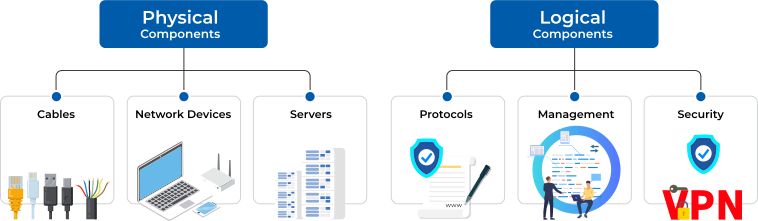
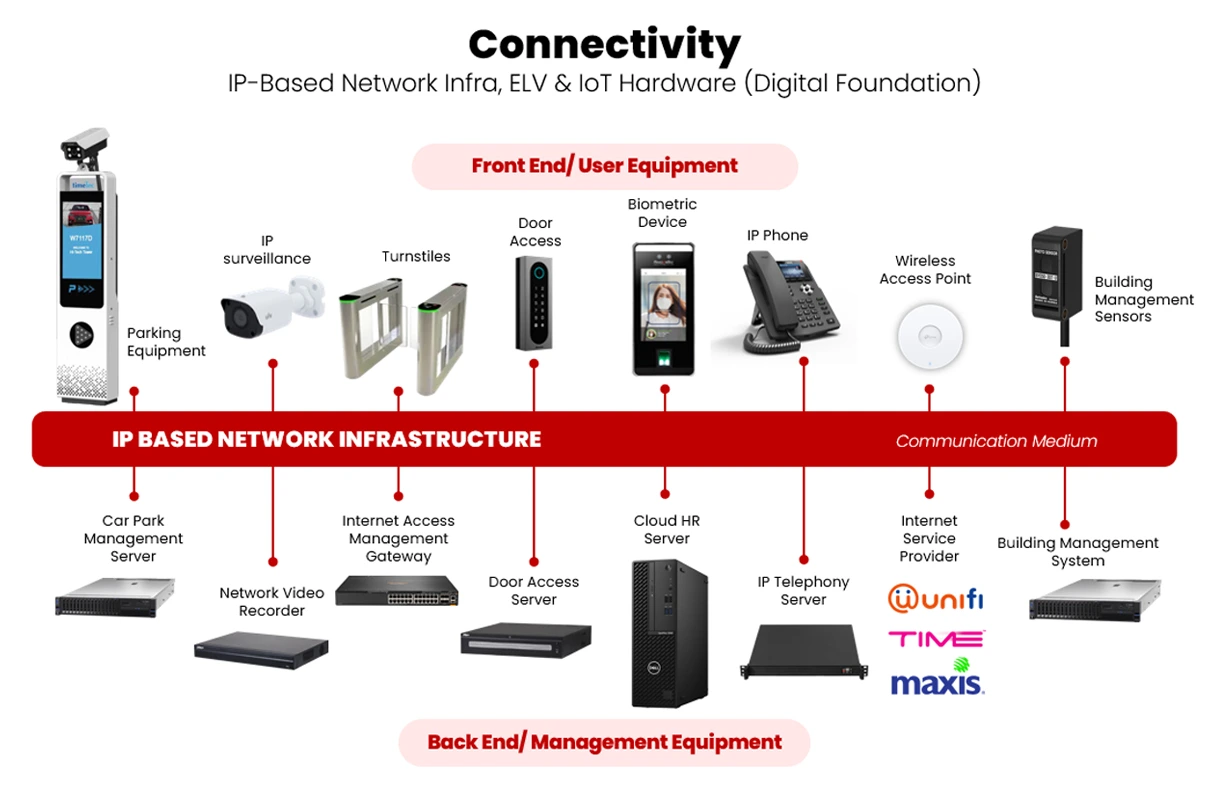
TimeTec offers complete Network Infrastructure solutions alongside our comprehensive PropTech ecosystem, delivering seamless connectivity to support smart building operations. From structured cabling to high-performance network equipment, our infrastructure services are designed to integrate flawlessly with TimeTec’s PropTech solutions—including smart access and elevator control, ELV & IoT automation, smart cashless and touchless parking, visitor management and etc., ensuring a reliable, scalable, and future-ready environment for modern commercial and residential buildings.
What Is a Well-Designed Network Infrastructure?
A well-designed network infrastructure is essential for any organization that relies on technology to operate effectively. It provides the foundation for integrating emerging technologies and new applications, allowing businesses to remain agile, up-to-date, and competitive in their industries.
For service providers, building a robust network infrastructure means ensuring scalability, high availability, and intelligent load balancing. These elements are critical to maintaining seamless connectivity and reliable system performance—key factors in today’s fast-paced digital environment.
Since network interruptions can never be entirely avoided, it's also vital to adopt streamlined network architectures and automated management tools. These help network administrators quickly identify, isolate, and resolve issues, minimizing downtime and ensuring optimal network functionality.
This guide explores the dynamic landscape of entertainment and popular media, covering essential categories, major industry players, and the evolving digital trends that shape how we consume content today. Core Categories of Entertainment Content
One of the most defining shifts in 2026 is the integration of Artificial Intelligence as a core part of the creative process rather than just a tool for automation.
Popular media is responding to this shift. Esports tournaments now fill stadiums and command higher viewership than the NBA Finals on certain nights. Roblox concerts attract 30 million virtual attendees. As the metaverse evolves (albeit slower than initially hyped), the distinction between creator, audience, and participant will vanish entirely.
In the evolving landscape of popular media, entertainment has shifted from a passive pastime to a "main attraction" that prioritizes deep audience engagement and interaction. To develop a post that resonates in today’s digital environment, you should focus on high-engagement formats like short-form video and memes, while grounding your message in current trends like AI-driven personalization and the influence of user-generated content.
The traditional "flywheel" model of media—where a movie or TV show leads to merchandise and theme parks—is expanding into a 24/7 digital reality.
Entertainment content and popular media have a profound impact on society, shaping our attitudes, values, and behaviors. Some key effects include:
Amateur.2023.daniela.antury.broken.down.xxx.108 [top] -
This guide explores the dynamic landscape of entertainment and popular media, covering essential categories, major industry players, and the evolving digital trends that shape how we consume content today. Core Categories of Entertainment Content
One of the most defining shifts in 2026 is the integration of Artificial Intelligence as a core part of the creative process rather than just a tool for automation. Amateur.2023.Daniela.Antury.Broken.Down.XXX.108
Popular media is responding to this shift. Esports tournaments now fill stadiums and command higher viewership than the NBA Finals on certain nights. Roblox concerts attract 30 million virtual attendees. As the metaverse evolves (albeit slower than initially hyped), the distinction between creator, audience, and participant will vanish entirely. This guide explores the dynamic landscape of entertainment
In the evolving landscape of popular media, entertainment has shifted from a passive pastime to a "main attraction" that prioritizes deep audience engagement and interaction. To develop a post that resonates in today’s digital environment, you should focus on high-engagement formats like short-form video and memes, while grounding your message in current trends like AI-driven personalization and the influence of user-generated content. Esports tournaments now fill stadiums and command higher
The traditional "flywheel" model of media—where a movie or TV show leads to merchandise and theme parks—is expanding into a 24/7 digital reality.
Entertainment content and popular media have a profound impact on society, shaping our attitudes, values, and behaviors. Some key effects include: