Ayatul Kursi Tajweed New -

Ayatul Kursi with Tajweed: The Ultimate Guide to Pronouncing the Throne Verse Correctly

You’ve probably recited it a thousand times. But here’s a question that might stop you in your tracks: Are you pronouncing every letter of Ayatul Kursi the way the Prophet Muhammad (ﷺ) did?

Reciting this verse involves several fundamental Tajweed principles that differentiate similar letters and ensure correct flow: ayatul kursi tajweed new

In Ayatul Kursi, we are talking about the attributes of Allah: Ayatul Kursi with Tajweed: The Ultimate Guide to

How did it feel? Different, right?

  • Daily 20–25 min: Break Ayatul Kursi into short phrases (3–5 words). Repeat each phrase 10–15 times focusing on correct letters and vowels.
  • Record yourself and compare to the model recitation.

Pro Tip: The strongest Qalqalah is at the end of a verse or breath. When you say Wasia, let the "T" bounce lightly—not a hard "tuh," but an echo. Daily 20–25 min: Break Ayatul Kursi into short

Also, look for Qaaf (ق) and Taa (ط). These need an echo (qalqalah).

  • مِّنْ عِلْمِهِ – This is Ikhfa, not Idghaam.
  • مِّن كُرْسِيِّهِ – Actually, the text reads: بِشَيْءٍ مِّنْ (Bishay’im min). Here the Noon Sakinah in Min meets a Meem (م). This is Idghaam Mislain (identical merging). The Noon is completely absorbed into the Meem, producing a doubled Meem sound (مّ) with Ghunnah.
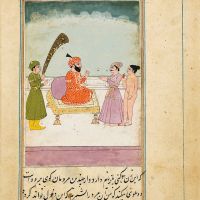
Commentary volume

Commentary volume

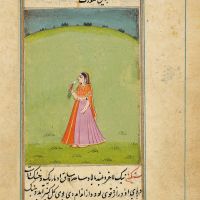
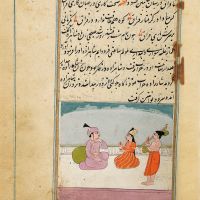
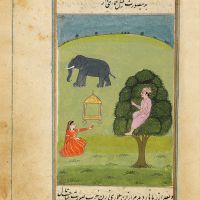
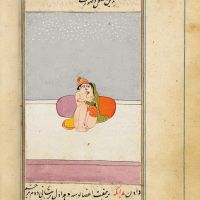
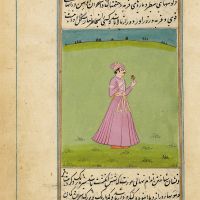
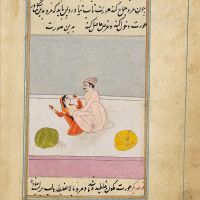
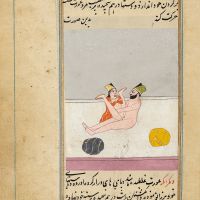
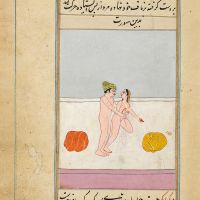
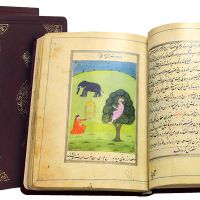
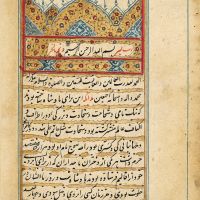
Lazzat al-nisâ (The pleasure of women)

Bibliothèque nationale de France


CONTENTS
 
  • From the Editor to the Reader
 
  • Lazzat al-nisâ and Its Significance in the Erotic Literature of the Persianate World.
Hormoz Ebrahimnejad (University of Southampton)
 
  • Lazzat al-nisâ. Translation.
Willem Floor (Independent Scholar), Hasan Javadi (University of California, Berkeley) and Hormoz Ebrahimnejad (University of Southampton)


ISBN : 978-84-16509-20-1

Commentary volume available in English, French or Spanish.

Lazzat al-nisâ (The pleasure of women) Bibliothèque nationale de France


Descripcion

Description

Lazzat al-nisâ (The pleasure of women)

Bibliothèque nationale de France


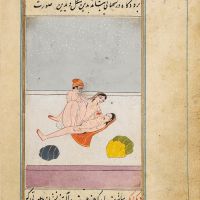
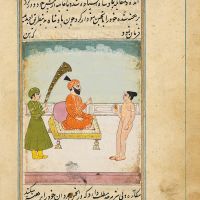
In Muslim India numerous treatises were written on sexology. Many of them included prescriptions concerning problems dealing with virility or, more precisely, with masculine sexual arousal. The Sanskrit text which is considered the primary source for all Persian translations is known as the Koka Shastra (or Ratirahasya) —derived from its author’s name, Pandit Kokkoka—, a title that was later given to all treatises in the genre. The Koka Shastra by Kokkoka was probably not the only such text known to Muslim authors.

The Lazzat al-nisâ is a Persian translation of the Koka Shastra, which contains descriptions of the four different types of women and indicates the days and hours of the day in which each type is more prone to love. The author quotes all the different works he has consulted, which have not survived to this day.


Ayatul Kursi with Tajweed: The Ultimate Guide to Pronouncing the Throne Verse Correctly

You’ve probably recited it a thousand times. But here’s a question that might stop you in your tracks: Are you pronouncing every letter of Ayatul Kursi the way the Prophet Muhammad (ﷺ) did?

Reciting this verse involves several fundamental Tajweed principles that differentiate similar letters and ensure correct flow:

In Ayatul Kursi, we are talking about the attributes of Allah:

How did it feel? Different, right?

Pro Tip: The strongest Qalqalah is at the end of a verse or breath. When you say Wasia, let the "T" bounce lightly—not a hard "tuh," but an echo.

Also, look for Qaaf (ق) and Taa (ط). These need an echo (qalqalah).

Cookie preferences

We use our own and third-party cookies to improve our services by analyzing your browsing habits. For more information, you can read our cookie policy. You can accept all cookies, configure them, or reject their use by clicking one of the buttons below.