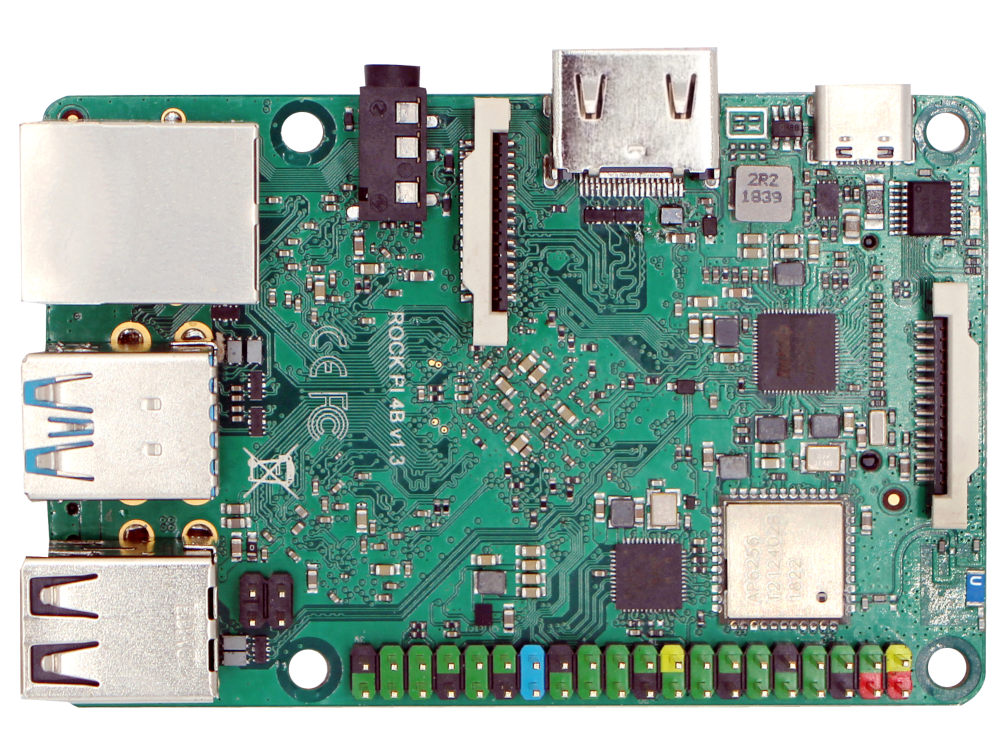
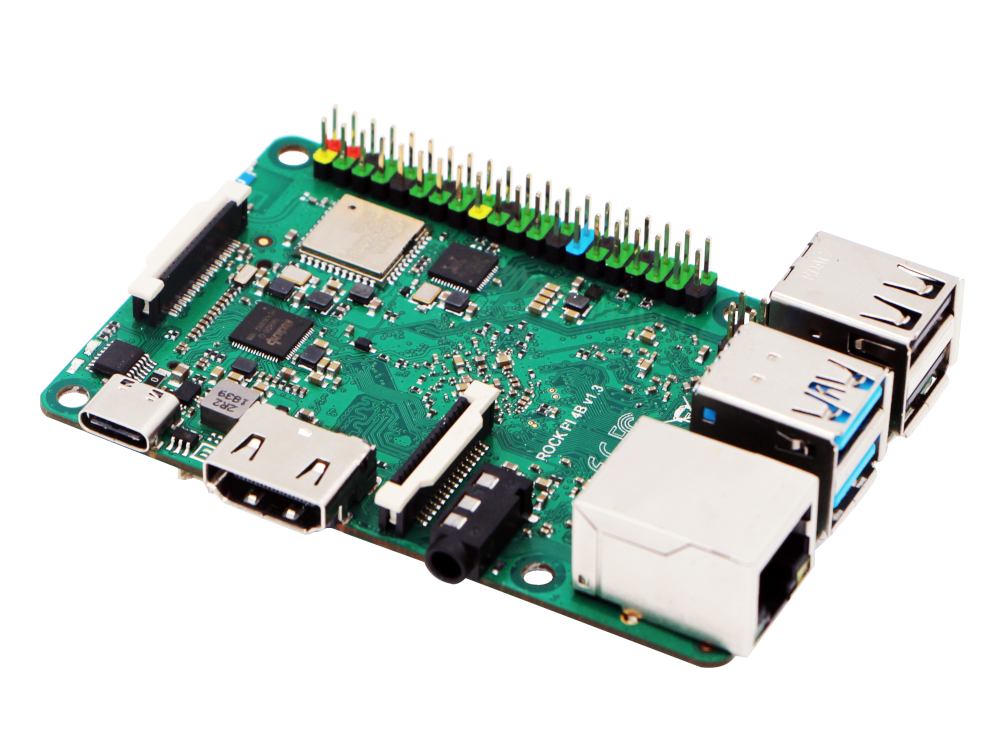
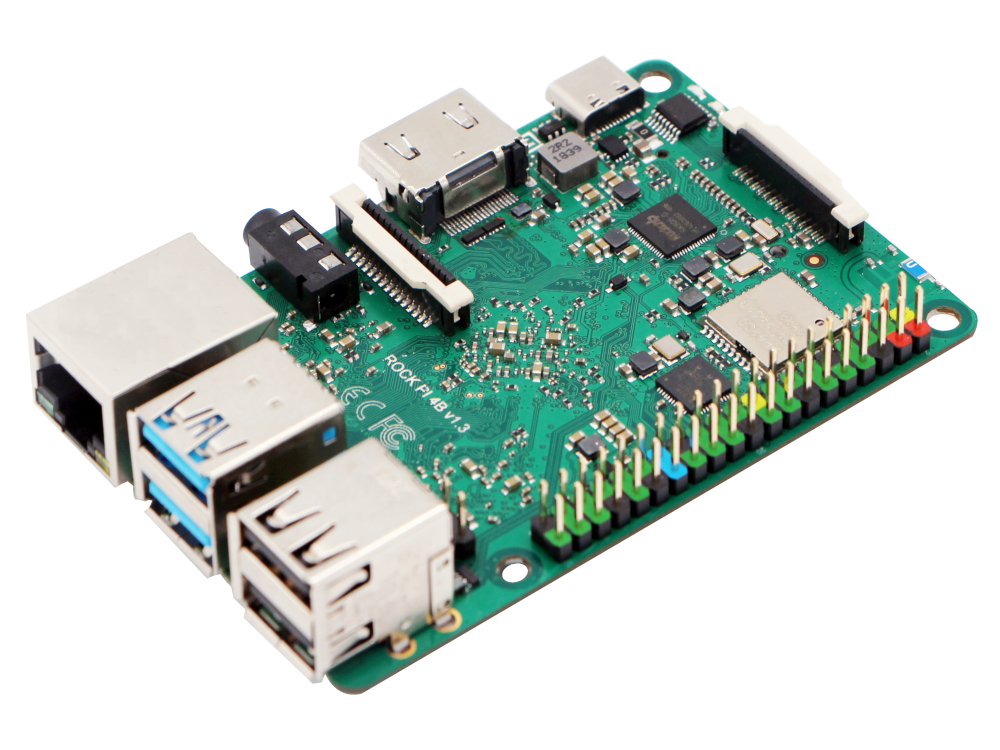
ROCK 4 has a modern and powerful hexa-core ARM based processor, RK3399 inside, it offers significantly improved performance versus other popular SBC boards. All models are equipped with LPDDR4 3200Mb/s RAM and optional high performance eMMC modules, boost all applications.
Read More
ROCK 4 features maker friendly expansion options, including a 40-pin GPIO interface that allow for interfacing with a range inputs from buttons, switches, sensors, LEDs, and much more.
ROCK 4 also features a Gbit LAN for network, with dedicated bus and controller, it works without latency under heavy load network applications. On board 802.11 ac wifi offers 2.4G & 5G WLAN connectivity. With Bluetooh 5.0, ROCK 4 benefits improved Bluetooth speed and greater range.
ROCK 4 also features one USB 3.0 host and one USB 3.0 OTG ports, each 5Gbps/s, working independently. The USB 3.0 OTG can work as USB device such as Android ADB or USB gadgets. A hardware switch is provided for OTG mode switch.
Read MoreROCK 4 supports mainstream AI stack with GPU acceleration. Further more, a dedicated hardware NPU accelerator coming up next for ROCK 4 will boosts complex Machine Learning algorithm and reduce the power.
Industrial standard MIPI CSI connector makes it easy to connect exsit cameras to ROCK 4 and ROCK 4 also supports industrial standard MIPI DSI for LCD and touch screen. With hardware accelerated algorithm, it's great for Computer Vision application, Robotics and much more.
Read More
By Alex M. Tech | Updated: April 12, 2026
Finally, a functional Facebook app must handle real-time interactions like posting status updates or liking content. This requires sending POST requests back to the Graph API. Handling these network operations on a background thread is critical; in Java, you might use ExecutorServices or AsyncTask to keep the UI responsive. By combining secure authentication, efficient data fetching, and a responsive design, you can build a Java-based mobile application that mirrors the core functionality of the Facebook experience while providing a foundation for more advanced features like push notifications or deep linking.
Configure your Facebook app by adding basic information:
The honest answer is that Facebook no longer makes a new Java app. The last official binary is almost a decade old. If you try to use it, you will face certificate errors, broken layouts, and no Messenger functionality.
Login: Enter your credentials. The new version supports Two-Factor Authentication (2FA) for added security. Troubleshooting Common Issues
How to Access: You can try downloading it by visiting d.facebook.com/install or m.facebook.com directly from your mobile browser.
By Alex M. Tech | Updated: April 12, 2026
Finally, a functional Facebook app must handle real-time interactions like posting status updates or liking content. This requires sending POST requests back to the Graph API. Handling these network operations on a background thread is critical; in Java, you might use ExecutorServices or AsyncTask to keep the UI responsive. By combining secure authentication, efficient data fetching, and a responsive design, you can build a Java-based mobile application that mirrors the core functionality of the Facebook experience while providing a foundation for more advanced features like push notifications or deep linking.
Configure your Facebook app by adding basic information:
The honest answer is that Facebook no longer makes a new Java app. The last official binary is almost a decade old. If you try to use it, you will face certificate errors, broken layouts, and no Messenger functionality.
Login: Enter your credentials. The new version supports Two-Factor Authentication (2FA) for added security. Troubleshooting Common Issues
How to Access: You can try downloading it by visiting d.facebook.com/install or m.facebook.com directly from your mobile browser.
Send us a email with your questions
+86 755 2778 4863
B53, 4F, Rainbow City
Xixiang, Baoan
Shenzhen, China java facebook app for mobile new