AKos
Consulting & Solutions GmbH
Home Company Info Impressum Contact Email

a chemoinformatics company
 

The Lean Startup Pdf Github Upd Access

The Lean Startup Pdf Github Upd Access
the lean startup pdf github upd

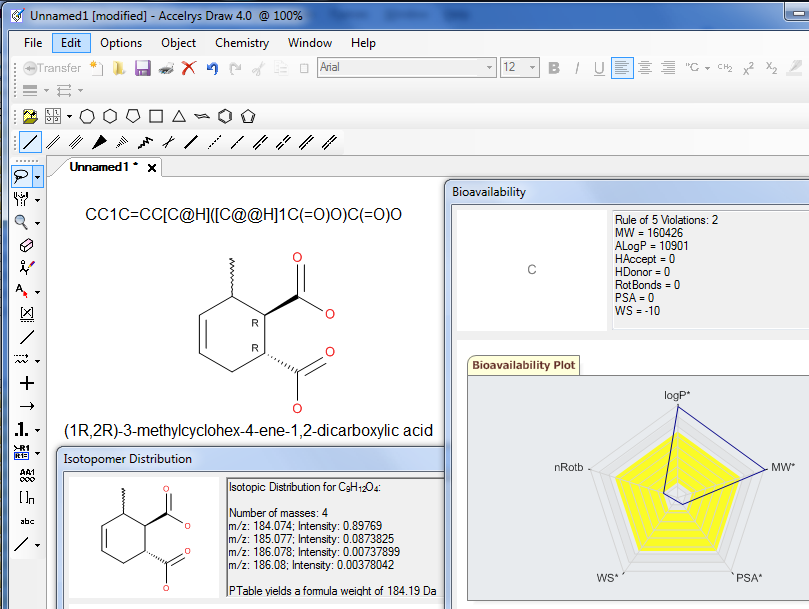
With the same look-and-feel as ISIS/Draw, Accelrys Draw delivers speed and efficiency to your chemical drawing experience.

Why upgrade from what you're already using?

  • Improved creation and presentation of chemical structures, biologics and chemical aspects of biologics
  • Additional features such as multiple undo, name-to-structure, structure-to-name conversion, molecule templates, ChemDraw file support, InChI and Canonical SMILES support
  • An all-purpose drawing tool that enables fast and easy structure and reaction drawing
  • Easy-to-use Rgroup functionality
  • Multiple free add-ins to support desk top searching, file viewing, reaction stoichiometry calculations, calculate as you draw physicochemical properties, Markush structure enumeration, ACD lab integration and much more...

Accelrys Draw can easily swap out existing ISIS/Draw or ChemDraw applications.


The Lean Startup Pdf Github Upd Access

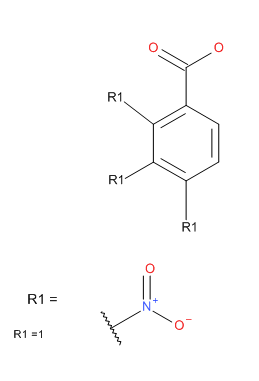
Click here for more details about Rgroups, an example, and a detailed procedure how to draw a Markush query.

To draw a Markush query:

  1. Draw the root structure. Use the other drawing tools.

  2. Add Rgroup atom to the root structure.

    1. Click the "Create Markush structure or query"v tool.
    2. Click the atom that you want to replace.
    3. Select an Rgroup from the palette.
  3. Draw the Rgroup members with the chemical drawing tools. Step 4 will always add an additional bond. Remove the CN bond of teh default NO2 query.

  4. Add Rgroup members.

    1. Click the "Create Markush structure or query" tool.
    2. Click the fragment that you want to add.
    3. Drag and drop the fragment onto the Rgroup definition (Rn=). Try toselect the whole group. Wait until you have a blue boy around the group.
  5. (Optional) Move attachment points.

    1. Click the Markush Query tool.
    2. Click the asterisk of the attachment point.
    3. Drag and drop the asterisk onto the atom that you want.
  6. (Optional) Change the occurence. If an Rgroup atom appears at more than one instance (or place) in the root structure, you see "R1 = n (where n is defined as the number of occurences), R2 >0, etc." appear automatically next to the Rgroup definition (Rn =). For each such Rgroup, you need to specify the frequency (occurrence), the number of times that a member of this Rgroup must appear in retrieved structures. To change the frequency:
    1. Select the Rgroup Query Tool.
    2. Click the occurence definition (R1 = n), located next to the Rgroup definition (Rn =).
    3. Select a number from the dialog box that is displayed.
    4. Click OK to accept your selection. The frequency definition is updated with your selection.

the lean startup pdf github upd

 
Generic  Structure Enumerator

The enumerator works against structures defined using the Rgroup tool in Accelrys Draw. In this mode you specify a scaffold with a number of Rgroup labels, then to add fragments to the Rgroup identifiers. The Add-in will calculate the complete set of structures that the Rgroups define.

You can also define a generic region using the Sgroup tool. Draw the basic structure and using the Sgroup tool, drag a pair of brackets around a region that is repeated in the substance. From the dropdown select ‘generic’ for the bracket type, then select apply and exit from the dialog. Right click on one of the brackets and select the Attach Data option. In the dialog enter REPEATRANGE into the Field description box, and then enter the range in the Data box; leave the Search Operator set to none; the Tag field is optional. A contiguous range is required in the Data box, for example 3-6.

A structure can contain both Rgroup definitions and Sgroup definitions, but they cannot overlap or be nested.

You have the option to enumerate on to Accelrys Draw’s canvas, into an SDfile, or into an Isentris for Excel compatible spreadsheet.
 
the lean startup pdf github upd  

The Lean Startup Pdf Github Upd Access

A review of Eric Ries's The Lean Startup emphasizes its role as a "foundational must-read" for entrepreneurs that shifts focus from traditional business planning to a scientific, experiment-driven methodology. The book's core philosophy centers on reducing waste by ensuring founders build products customers actually want before spending significant capital. New York University Core Pillars of the Methodology The Build-Measure-Learn Loop:

  1. Annotated PDF: A PDF version of "The Lean Startup" with annotations and footnotes that provide additional context and explanations.
  2. GitHub Issues: A issue tracker where readers can discuss and ask questions about specific sections of the book.
  3. Pull Requests: A feature that allows contributors to suggest changes, corrections, or additions to the annotations.
  4. Discussion Forum: A forum where readers can discuss the book, share their experiences, and ask questions.

For those new to the Lean Startup methodology, the Lean Startup PDF is a comprehensive guide to building and launching successful products. The PDF, which has been downloaded millions of times, provides a detailed overview of the Lean Startup approach, including: the lean startup pdf github upd

The Lean Startup by Eric Ries Book Summary - Lincoln College Alumni A review of Eric Ries's The Lean Startup

Check for Markdown (.md) Files: Many users prefer reading summaries in .md format directly in the browser rather than downloading a PDF. Annotated PDF : A PDF version of "The

Possible Implementation:

  • Eric Ries. (2011). The Lean Startup: How Today's Entrepreneurs Use Continuous Innovation to Create Radically Successful Businesses. Crown Publishing.
  • Lean Startup Official Website: https://leanstartup.com/
  • Eric Ries' GitHub page: https://github.com/ericries
 
http://accelrys.com/products/informatics/cheminformatics/draw/add-ins.html  

Chemical Drawing Programs – The Comparison of Accelrys (Accelrys) Draw, ChemDraw, DrawIt, ACD/ChemSketch and Chemistry 4-D Draw

Dr. Tamas E. Gunda

University of Debrecen, POB 70, H-4010 Debrecen, Hungary, e-mail:

Last major update : 1.11.2011

If you have any comment, do not hesitate to contact the author at the above adress.


http://dragon.klte.hu/~gundat/rajzprogramok/dprog.html  

Up